Fish Costa Rica · Marlin tackle & rigging
How the Pros Rig
for Big Marlin
The tackle, leaders, hooks, teasers and trolling spread Costa Rica’s offshore crews use for blue and black marlin, and why each piece matters for the hook-up and the release.
Rods & reels
Three classes of tackle.
| Heavy · 80–130 lb | Medium · 50–60 lb | Light · 20–30 lb | |
|---|---|---|---|
| Target | Blue & black marlin | Sailfish, dorado, smaller marlin | Yellowfin tuna, bonito |
| Reels | Shimano Tiagra 80W / 130A, Penn International 80, Avet 130 | Shimano Tiagra 50W, Penn International 50 | Shimano TLD 25, Penn Fathom 30, large spinning reels |
| Rods | 6–7 ft with roller guides | 5’6″–6′ stand-up rods | Light trolling and spinning rods |
| Line | Dacron or braid backing with a mono top shot | Mono or braid with a top shot | 40–60 lb braid with fluorocarbon leader |
Lines, leaders & hooks
The connection
that has to hold.
- Top shot: a mono top shot (around 100–200 yards) over the backing, for stretch and abrasion resistance
- Double line: a 3–5 ft Bimini twist
- Wind-on leaders: 200–400 lb mono or fluorocarbon, about 25 ft
- Swivels: heavy ball-bearing swivels rated 400 lb or more
- Crimps: double-sleeved and checked every day
- Hooks: non-offset circle hooks, usually 10/0–11/0 (8/0–12/0 depending on bait size)
They hook the marlin in the corner of the jaw instead of deep in the throat, which means cleaner releases and healthier fish. Non-offset circle hooks are required for billfish in Costa Rica.
The trolling spread
Building a fake
school of bait.
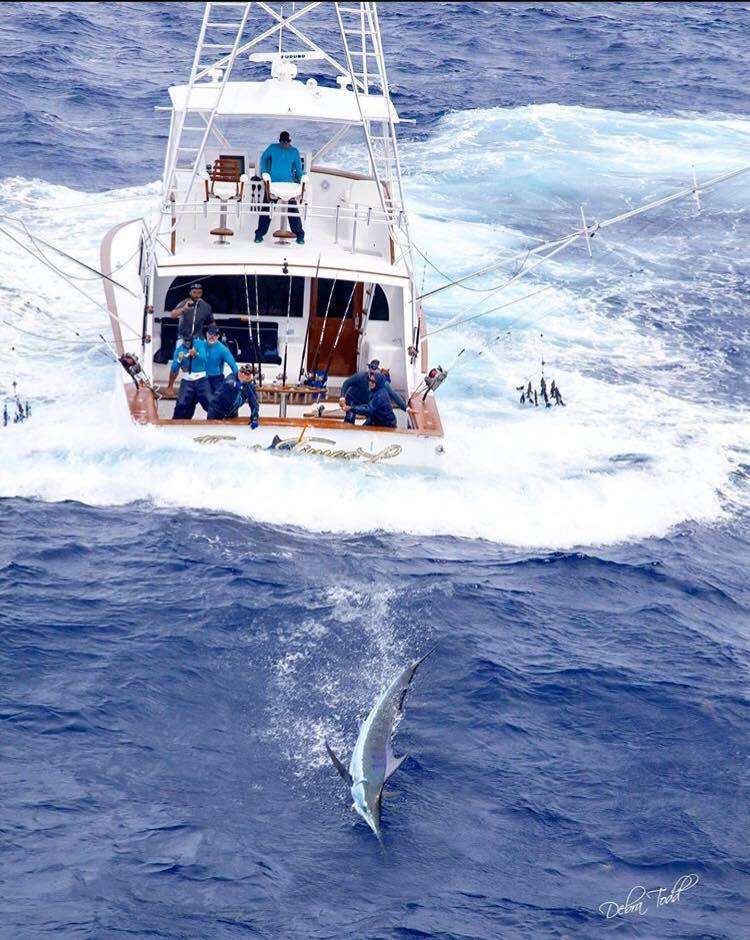
- Dredges2–3 tier rigs of squid bodies or mullet run deep below the surface to look like a bait school.
- TeasersHookless squid chains and soft-head teasers close behind the boat. They raise the marlin.
- Short & long linesLures or rigged baits on the outriggers, spaced wide to cover water.
- Center lineA lure run far back down the middle (the “shotgun”).
- Pitch baitsBallyhoo, bonito or mackerel ready in the cockpit, pitched when a marlin lights up on a teaser.
Lures & teasers
What goes in the water.
The fight & the release
Short fight,
healthy release.
- Drag: about 25–30% of line breaking strength at strike
- Fighting chair for heavy tackle, or a stand-up harness and belt, fitted to the angler before lines go in
- Boat handling: the captain backs down and keeps a steady speed so the fish isn’t exhausted
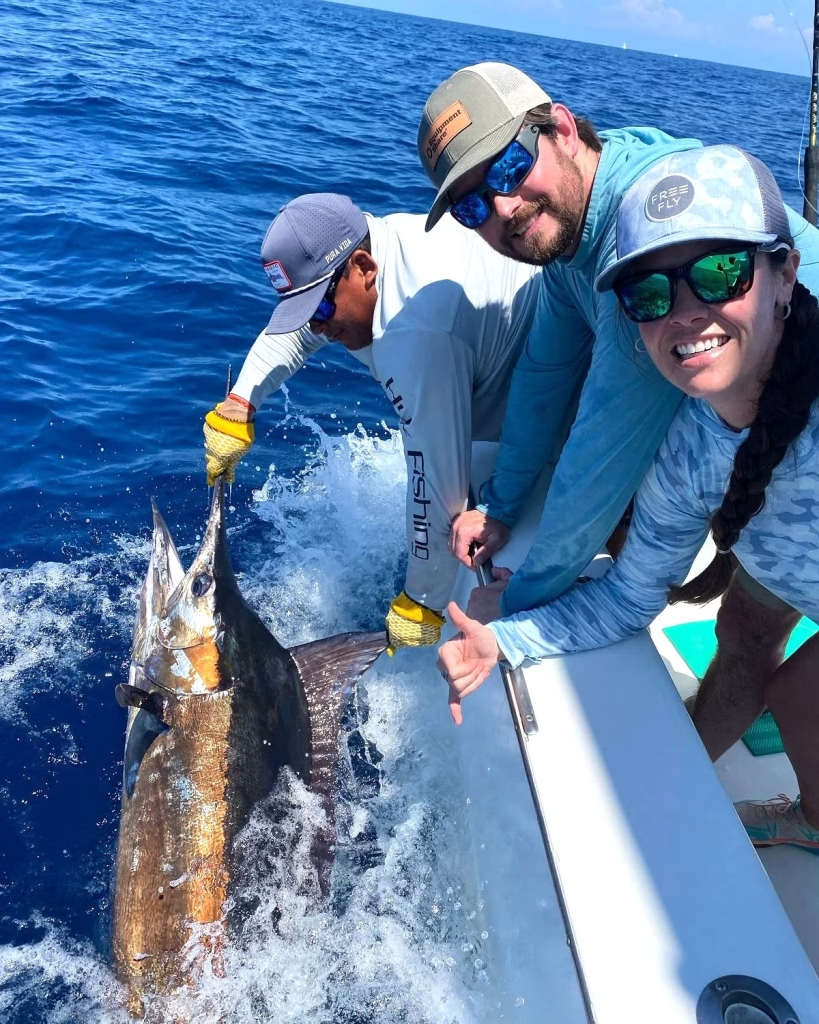
- Release tools: dehookers and gloves for the wireman; no gaffs on billfish
- Tag sticks for research tagging when the fish is at the boat
Want to fish this setup?
Our offshore and FAD boats come rigged with this kind of tackle, so you don’t need to bring any.
Rigging questions
Quick answers.
Tackle nerd? Talk to us before your trip.
What size tackle is used for marlin in Costa Rica?
Heavy 80–130 lb class for blue and black marlin, and 50–60 lb class for sailfish, dorado and smaller marlin. Tuna are often fished on 20–30 lb tackle.
What hooks are used for marlin in Costa Rica?
Non-offset circle hooks, usually 10/0–11/0 (8/0–12/0 depending on bait size). They’re required for billfish and hook fish in the jaw for cleaner releases.
How long is a marlin leader?
Crews usually run wind-on leaders of about 25 ft in 200–400 lb mono or fluorocarbon.
What is a teaser and switch?
Hookless teasers raise the marlin behind the boat. When it lights up, the crew pulls the teaser away and the angler pitches a bait on a circle hook.
What drag do you use for marlin?
Around 25–30% of the line’s breaking strength at strike. The crew sets it before the lines go in.
Plan your trip
Fish a pro spread
for big marlin.
Tell us your dates and target. We’ll match you with a crew that rigs like this every day.