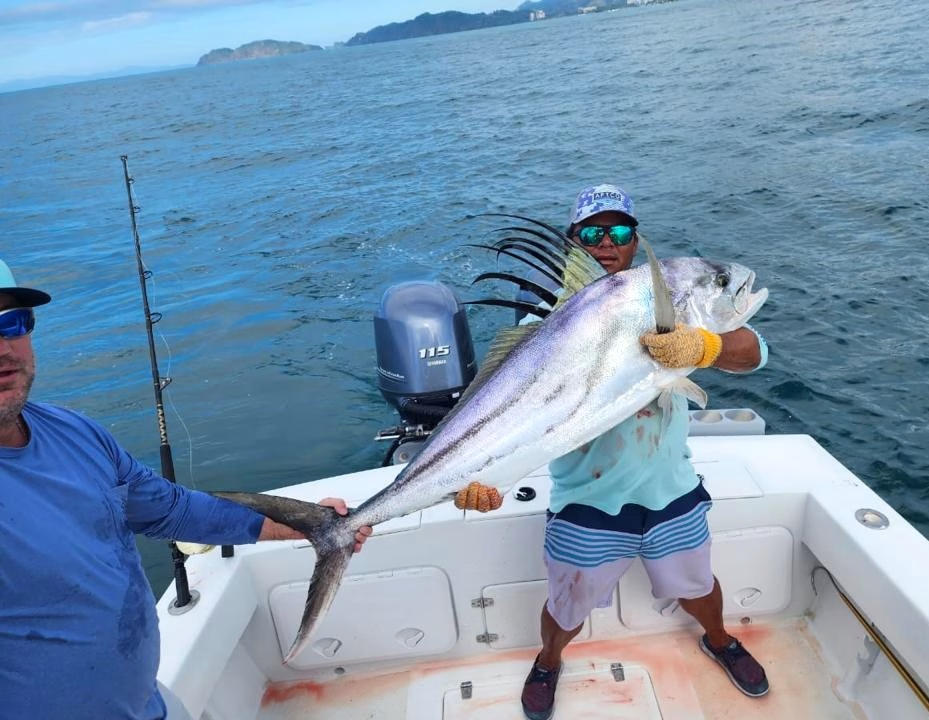
Few fish inspire the same mix of excitement and respect as the roosterfish (Nematistius pectoralis). With its seven-pointed dorsal comb and ferocious nearshore runs, it has become the emblem of Costa Rica’s inshore fishing scene. Anglers travel from around the world to experience the heart-pounding moment when a roosterfish explodes on a bait or popper just yards from the beach. Success, however, depends on timing, presentation, and understanding this intelligent predator’s behavior. This article breaks down the top techniques that consistently produce roosterfish in Costa Rica, from live bait tactics to artificial lures and fly presentations, all while following responsible catch-and-release practices.
For more inshore strategies and regional breakdowns, visit our pages on Inshore Fishing in Costa Rica and Costa Rica Fish Species. You’ll find complete guides to where and when to fish, plus detailed charter and package options through Costa Rica Fishing Packages.
Understanding Roosterfish Behavior
Before diving into tactics, it’s essential to know how roosterfish hunt. These predators thrive in dynamic coastal zones — rocky points, surf breaks, island ledges, and river mouths where bait congregates. They feed primarily on sardines, mullet, and lookdowns, ambushing prey by driving them toward structure or into shallow water. Studies like Sepúlveda et al. (2015) confirm that roosterfish spend most of their lives in shallow water (less than 12 meters) and are strongly associated with coastal reefs and currents, all crucial details for effective targeting.
Roosters don’t roam the open ocean like tuna; they patrol the same areas repeatedly. Once you find a productive point or current line, it’s worth revisiting at different tides and light conditions. Early mornings with moderate current flow are often best, especially when bait is visible near the surface.
Technique #1: Live Bait Mastery
Live bait is the cornerstone of roosterfish fishing in Costa Rica. Nothing beats a lively sardine, mullet, or lookdown presented naturally in the current. Most experienced captains slow-troll baits at 1–2 knots along structure or current seams, allowing the fish to strike naturally. Use a 5/0 to 8/0 non-offset circle hook on a 40–60 lb fluorocarbon leader tied to 30–50 lb braid main line. The key is restraint. When the bite comes, resist striking immediately. Instead, allow the fish to turn with the bait and come tight slowly so the circle hook finds the corner of the jaw.
Top local captains have refined this technique into an art form. In regions like Jaco and Quepos, boats often work bait schools near the surface, pitching live sardines toward visible boils or finning roosters. Down south in Golfito and the Osa Peninsula, anglers use larger baits like bonito or blue runners to tempt trophy fish over deep reefs. Adjust bait size to your target area: smaller baits for clear, calm water; larger ones when conditions are rough or the fish are less aggressive.
Technique #2: Topwater Explosions
Few experiences compare to a roosterfish striking a surface lure. The sudden flash of the fin, the violent take, and the blistering run make topwater fishing unforgettable. Long-casting spinning setups are preferred, with 7–8 ft rods rated for 40–50 lb braid. Large poppers and stickbaits that imitate sardines, mackerel, or mullet are top producers. Work the lure in controlled sweeps, not frantic jerks. Roosterfish often shoulder the bait before committing, so a consistent rhythm increases hookups.
Captains around Los Sueños and Herradura report that calm mornings with light chop are ideal for surface strikes. Cloud cover can extend the bite window later into the morning. Focus on rocky points, beach drop-offs, and current edges where bait pushes tight to shore. The best anglers combine patience and precision, repeating casts over promising structure until the fish reveals itself.
Technique #3: Jigs and Soft Plastics for Deeper Fish
When roosterfish stay deeper, jigs and soft plastics shine. A slow-pitch jig fluttered along reef slopes or a heavy swimbait worked near the bottom can trigger reaction bites from fish not actively feeding on top. Use medium-heavy spinning or conventional setups with 40–60 lb leader and jigs in the 60–120 gram range, depending on current. Match the color to the light and water clarity, silver, pearl, and blue hues imitate local baitfish perfectly.
In the Gulf of Nicoya and Paquera area, vertical jigging around submerged structure produces consistent action, especially during the mid-tide when current runs strongest. Some anglers prefer casting paddle-tail swimbaits on 1-oz jig heads across shallow reefs; this approach often produces surprise strikes from both roosters and snappers.
Technique #4: Fly Fishing Challenges and Rewards
Fly fishing for roosterfish is one of the ultimate tropical challenges. The fish’s speed, power, and unpredictable feeding behavior test even experienced anglers. A 10–12-weight rod with an intermediate or sinking line is standard. Flies should imitate sardines or mullet and push water effectively, think brush flies, deceivers, and EP-style baitfish. Retrieving speed and consistency are critical: once a rooster locks on, it expects the fly to keep moving steadily.
Captains along the Central Pacific coast sometimes chum lightly with sardines to keep roosters near the boat, giving fly anglers more time to present. The fish may approach fast, tail out of the water, then circle before striking. Proper teamwork between the captain, mate, and angler is essential to success. Many anglers consider a single roosterfish on a fly the catch of a lifetime.
Choosing the Right Gear
Your gear setup plays a major role in both success and fish survival. Opt for medium-heavy rods that provide control without over-stressing the fish. Use high-quality fluorocarbon leaders and corrosion-resistant hooks. Always replace treble hooks on lures with inline singles or barbless options, which makes release faster and safer. Keep tools like long-nose pliers, dehookers, and lip grips within reach.
For half-day or mixed trips that target roosterfish along with jacks, snapper, and mackerel, check our Half-Day Fishing Charters page. These outings are ideal for anglers of all skill levels and often yield multiple species on the same day.
Environmental Factors That Affect Success
Even the best technique won’t work without the right conditions. Roosterfish rely heavily on current, visibility, and bait presence. In Costa Rica, the green season (May–November) brings increased runoff that fuels plankton growth and baitfish abundance, drawing roosters closer to shore. During the dry season (December–April), clear water and calm seas favor topwater and sight-fishing opportunities.
Wind, tide, and moon phase also play roles. Moderate wind helps concentrate bait against points, while strong tides activate current seams that attract predators. Some captains swear by early-morning high tides during the waning moon, when bait is most active in shallow water. Keep track of patterns by following our Costa Rica Fishing Experts Blog for local updates and seasonal reports.
Ethical Practices and Fish Care
Roosterfish are exclusively a catch-and-release species in Costa Rica, a policy widely respected by anglers and captains alike. Handle every fish as if it were the future of the fishery. Use circle hooks, minimize air exposure, and keep fish in the water for photos whenever possible. The IGFA’s ongoing research confirms that roosters released properly have exceptionally high survival rates, particularly when caught on suitable tackle and revived at the boat’s side.
MarViva and FECOP’s Best Practices Guide for Tourist and Sport Fishing in Costa Rica (2024) further reinforces the importance of using circle hooks, supporting the fish horizontally during photos, and encouraging tourists to release all roosterfish. These small actions make a major impact on maintaining a world-class fishery.
Putting It All Together: A Proven Strategy
1. Start the morning slow-trolling live sardines near a rocky point or current line.
2. Switch to poppers once light improves and surface activity increases.
3. If the bite slows, move slightly deeper with slow-pitch jigs or soft plastics.
4. End the session with a fly rod if conditions allow; the visual payoff is worth it.
5. Always release roosterfish with care and note tide, wind, and bait patterns for your next outing.
By combining multiple techniques and staying flexible, you maximize your odds of finding fish in varying conditions. Costa Rica’s coastal diversity makes every roosterfish trip unique, and the best captains adapt on the fly to whatever nature provides.
Ready to Refine Your Roosterfish Skills?
Whether you’re learning the basics or chasing a personal best, Costa Rica’s inshore waters are the perfect classroom. With expert local captains, calm seas, and year-round action, there’s no better place to practice the art of roosterfish fishing. Build your next trip through Costa Rica Fishing Packages and explore more tips, stories, and travel updates on our Costa Rica Fishing Experts Blog.
Master these techniques, fish responsibly, and you’ll discover why the roosterfish is not just another catch, it’s the heartbeat of Costa Rica’s inshore sportfishing tradition.