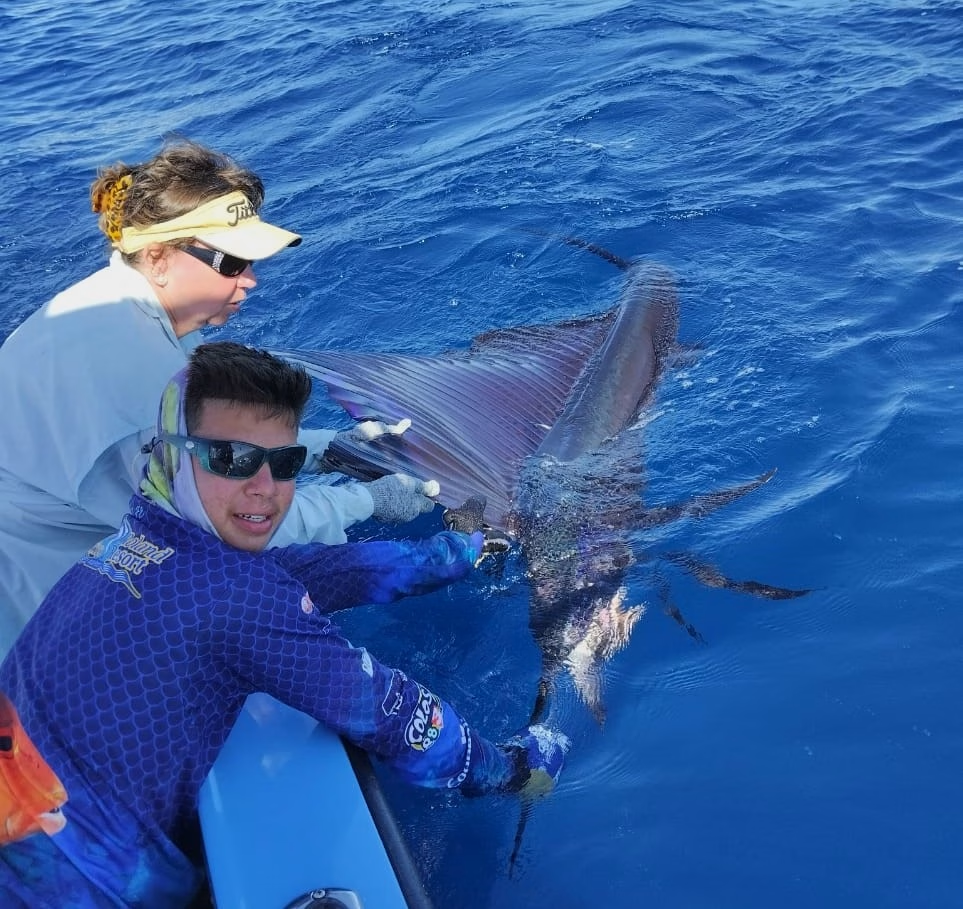
A marlin shows up
A fish rises into the spread behind the teasers. Captains count raises to measure a day.
Fish Costa Rica · Marlin & seamounts
Blue, black and striped marlin all hunt over Costa Rica’s offshore mountains. Here’s why the seamounts hold so many marlin, how each species uses them, and what a marlin day out there really looks like.
The short version
Marlin need deep, warm water and a lot of food. Costa Rica’s seamounts deliver both: deep blue water all around, currents pushing nutrients up the slopes, and bait (sardines, squid, bonito) concentrated in one place. FADs anchored nearby gather even more bait. Marlin know where the food is, and they come back to it.
Why marlin love seamounts
The full science: Seamounts of Costa Rica · What are FADs?
The three marlin
The reason most anglers go to the seamounts. Big, aggressive and found in the deep blue water around the peaks and FADs.
Peak May–October → The heavyweightHangs near drop-offs and pinnacles, the steepest structure. Fewer in number, but often bigger and more stubborn.
Best June–August → The northern visitorMostly in the northern waters off Guanacaste rather than the central seamounts.
Nov–March, North Pacific →Can’t tell them apart? Blue vs black marlin · Marlin vs sailfish
Marlin talk, decoded
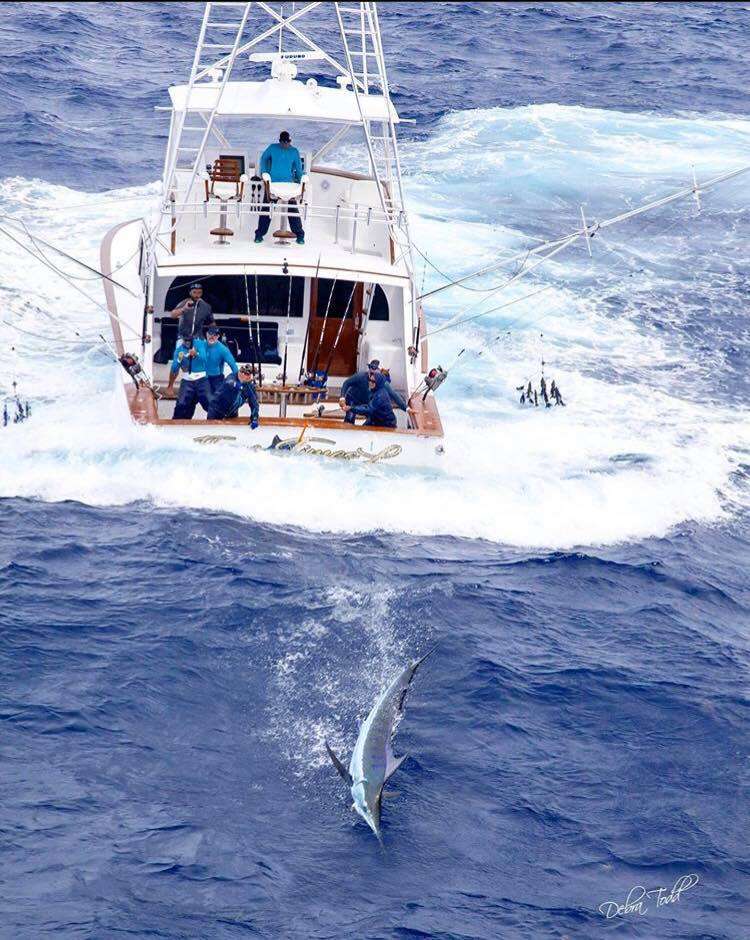
A fish rises into the spread behind the teasers. Captains count raises to measure a day.
The crew pulls the teaser away and the angler pitches a bait. Not every raise bites.
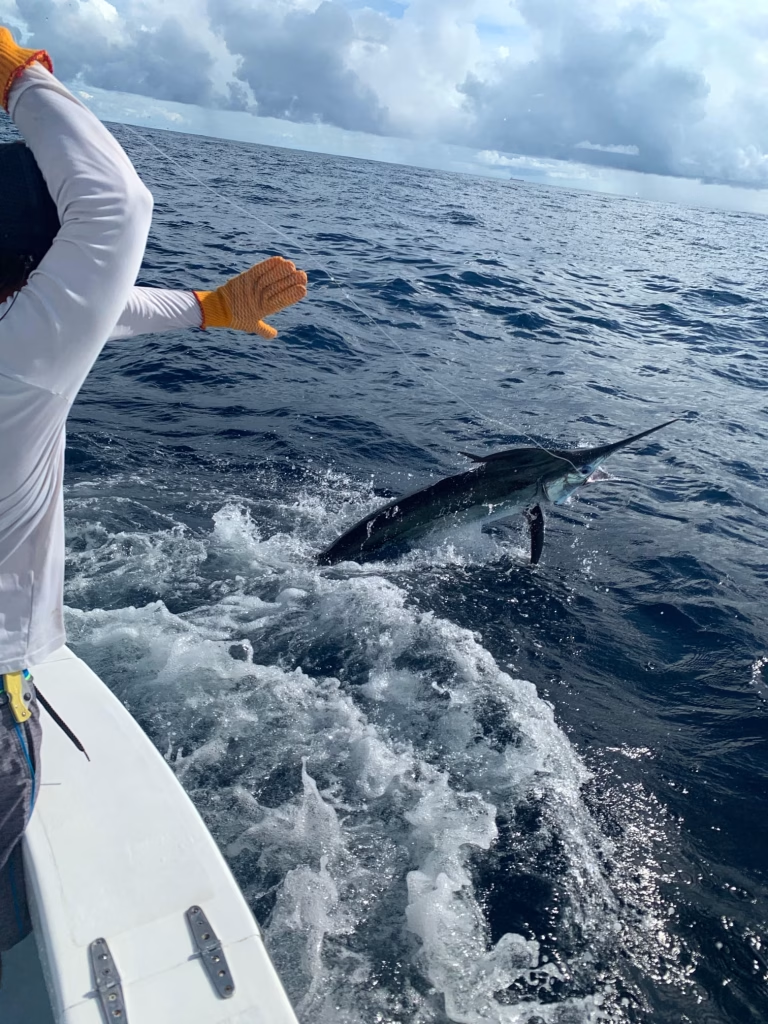
Circle hooks set in the jaw, and the fight is on: jumps, long runs, deep dives.
The leader is touched, the photo is taken in the water, and the marlin swims off.
On a good seamount day crews can raise several marlin, and on the best days many more. Some days are slow. That’s why multi-day trips pay off.
How crews fish for marlin
How the crews rig: pro marlin rigging
When to go
Prime time for seamount marlin. June to early September is the favorite window for dedicated trips. Book several months ahead, since long-range boats fill up first.
Sailfish season on the Central Pacific. Marlin are still caught, sometimes on day trips closer to shore, but most anglers fish sailfish.
Billfish are catch-and-release in Costa Rica. Crews use circle hooks, keep fights short, and many tag fish for research. Are marlin endangered?
Marlin questions
Want to fish the seamounts? Ask us.
Seamounts are surrounded by deep, warm blue water and concentrate food: currents push nutrients up the slopes, bait gathers, and FADs nearby gather even more. Marlin follow the food.
Mainly blue marlin, with black marlin near the steepest drop-offs. Striped marlin are found mostly in the northern waters off Guanacaste.
A raise is when a marlin comes up into the spread behind the teasers. Not every raise turns into a bite, so captains count raises, bites and releases separately.
May to October, with June to early September the favorite window for dedicated marlin trips.
Yes. Billfish are catch-and-release, using circle hooks and short fights, and many are tagged for research.
Plan your trip
Tell us your dates and how many days you can spend offshore. We’ll plan your seamount marlin trip.