It’s one of the most incredible sights on the Pacific Ocean, hundreds of spinner dolphins leaping and spinning across the surface, with schools of yellowfin tuna feeding just below them. For Costa Rican captains, this natural partnership between dolphins and tuna is a daily clue that leads to some of the most exciting offshore action anywhere in the world.
Understanding how these two species interact, and how to find them, is the key to consistent tuna success. Here’s how professional crews in Los Sueños, Quepos, and Golfito locate and fish spinner dolphin pods to put anglers right in the heart of the action.
Why Tuna and Spinner Dolphins Swim Together
Yellowfin tuna and spinner dolphins share a remarkable symbiotic relationship. They often hunt together, taking advantage of each other’s strengths. The dolphins use echolocation to locate schools of baitfish like sardines, mackerel, and squid. Tuna follow close behind, feeding on the same prey as the dolphins drive them to the surface.
For anglers, spotting dolphins offshore is one of the most reliable ways to find feeding tuna. These pods can stretch for miles, and the ocean comes alive, birds diving overhead, tuna crashing through bait, and dolphins spinning in tight circles below.
Where to Find Spinner Dolphins in Costa Rica
The Central and Southern Pacific coasts of Costa Rica are prime territory for dolphin-associated tuna schools. Crews typically encounter them 15 to 40 miles offshore from Los Sueños and Marina Pez Vela. In the far south, around Golfito and the Osa Peninsula, tuna and dolphin pods are even larger, sometimes extending across several kilometers of open ocean.
Calm mornings offer the best visibility. Captains scan the horizon for diving seabirds, slicks on the surface, or splashes from dolphins breaching. These visual cues often lead directly to active feeding zones where tuna are striking near the surface.
How Captains Locate Tuna with Dolphins
Locating tuna under spinner dolphins requires experience and precision. Crews rely on a combination of observation, electronics, and instinct developed through years on the water. Here’s how it’s done:
- Spotting Birds: Frigate birds and terns circling and diving indicate surface feeding. If the birds are moving steadily in one direction, they’re often following a traveling dolphin-tuna pod.
- Listening for Dolphins: The sound of dolphins surfacing and breathing can often be heard before they’re seen, a sign that a feeding frenzy is nearby.
- Sonar and Temperature Charts: Captains monitor sonar for bait concentrations and use temperature charts to find the warm water bands that tuna prefer.
- Patience and Positioning: Once the pod is spotted, boats stay slightly ahead or alongside the moving dolphins, trolling or casting into the edge of the school to avoid spooking them.
Fishing Techniques Around Dolphin Pods
When tuna are feeding under spinner dolphins, the action is fast and chaotic. Crews use light trolling gear, live bait, or topwater poppers to match the speed of the fish. The key is to approach calmly, cutting the engines and letting the boat drift near the feeding area often works best.
Trolling
Small jet heads, feathers, and cedar plugs trolled near the pod’s perimeter are highly effective. Tuna often strike immediately after a dolphin surfaces or a baitfish jumps.
Live Bait
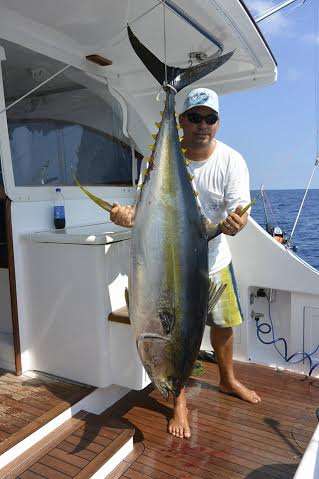
When live sardines or mackerel are available, pitching them into the school can result in instant hookups. The bait swims naturally among the feeding tuna, producing quick strikes from fish that may weigh anywhere from 40 to 150 pounds.
Popping & Casting
For experienced anglers, surface casting with large poppers or stickbaits offers some of the most visual and exciting tuna fishing in Costa Rica. Watching a 100-pound yellowfin explode on a lure beside spinning dolphins is unforgettable.
Seasons for Dolphin-Associated Tuna
While tuna are present year-round, the most consistent dolphin activity occurs from May through November, when offshore bait schools are thickest. During these months, weather patterns create stable ocean temperatures that attract both dolphins and tuna into predictable offshore zones.
| Month | Activity Level | Notes |
|---|---|---|
| May – July | High | Dolphin pods are still visible, and less frequent tuna are under them |
| August – October | Peak | Heavy feeding activity offshore, calm mornings |
| November – January | Moderate | Smaller pods closer to shore |
| February – April | Variable | Dolphin pods are still visible, and less frequent tuna under them |
Check our Costa Rica Fishing Calendar for detailed monthly tuna predictions by region.
Conservation and Dolphin Safety
Costa Rican captains follow strict guidelines to protect spinner dolphins, ensuring minimal disturbance while fishing near them. Engines are kept at idle speed, and boats maintain a respectful distance. There’s no need to chase the pod; tuna schools are usually close by and will come to the baits naturally.
These practices are not only ethical but also improve fishing results. Calm, respectful approaches keep the tuna feeding undisturbed and result in better hook-up rates.
Family-Friendly Tuna Encounters
Fishing under spinner dolphins isn’t just productive, it’s fun and educational. Families often combine these trips with wildlife watching. Alongside tuna and dolphins, you might see sea turtles, pilot whales, and even manta rays gliding below the surface. It’s a chance to connect with nature while enjoying world-class fishing.
Book Your Tuna Adventure
At Fish Costa Rica, we partner with captains who know exactly how to locate these incredible dolphin-tuna associations safely and efficiently. Whether you’re looking for a full-day trip or an overnight expedition, we’ll match you with the perfect boat and crew.
Contact us today at 1-800-986-6980 or WhatsApp +506 8888 4723 to book your Costa Rica tuna trip and experience the thrill of finding fish under spinner dolphins.
Continue exploring: